
Michele A. Lebron | December 22, 2025 | Child Custody

Shared parental responsibility is Florida’s starting point for most custody cases. It means both parents share the right—and duty—to make major decisions for their child. Courts prefer this setup because kids do best when both parents stay involved. But shared responsibility does not always mean a 50/50 schedule.
Timesharing is a separate question that the judge decides based on the child’s best interests. Understanding how Florida applies these rules will help you plan, avoid conflict, and protect your child.
What Shared Parental Responsibility Means
Under Florida law, parents with shared parental responsibility must consult each other on big choices and try to agree. Day-to-day choices follow the parent who has the child at that time. If parents cannot cooperate, the court can give one parent “ultimate decision-making” in limited areas while keeping the rest shared.
In rare situations, the court may order sole parental responsibility if shared decision-making would harm the child. The goal is to keep both parents engaged while protecting safety and stability.
Decision-Making vs. Time-Sharing
Decision-making covers major choices like:
- Education (school selection, IEPs, tutoring)
- Non-emergency medical and dental care
- Mental health counseling and therapy
- Extracurriculars, travel, and religious upbringing
Time-sharing is the schedule—who the child is with, and when. Keeping these concepts separate helps you focus negotiations and reduce future disputes.
Best Interests and the 50/50 Presumption
Florida now presumes that equal time-sharing is in a child’s best interests. Either parent can overcome that presumption with proof that a different schedule better serves the child.
Judges consider many best-interest factors, including each parent’s ability to meet the child’s needs, keep a stable routine, and encourage a healthy relationship with the other parent.
Evidence of domestic violence, substance abuse, or serious conflict can shift the schedule away from equal time and may affect decision-making authority, too.
When Courts Limit Shared Decision-Making
Shared parental responsibility is not automatic when it would put a child at risk. If one parent has a history of domestic violence, untreated substance abuse, serious mental health instability, or patterns of undermining medical or school needs, a judge may order sole parental responsibility.
Another option is shared responsibility with one parent having ultimate decision-making in a narrow category, such as medical care. Courts tailor orders to protect the child while preserving safe parent-child bonds.
Parenting Plans and Practical Tips
Every case needs a written parenting plan approved by the court. A strong plan spells out the time-sharing schedule, holiday rotations, travel rules, how parents will communicate, and how they will resolve future disagreements.
Build it with your child’s school calendar, transportation needs, and extracurriculars in mind. Use specific pickup times and locations, and choose a communication method (like a parenting app) to keep messages clear. The more detailed your plan, the fewer conflicts you’ll face later.
Modifying Orders and Relocation
Life changes. Florida allows modifications when there is a substantial, material, and unanticipated change, and the new plan serves the child’s best interests.
Examples include:
- Major schedule changes
- A parent’s relocation
- A child’s new medical or educational needs
If a parent wants to move 50 miles or more for 60 days or longer, Florida’s relocation law requires a written agreement or a court order before moving. Acting early, documenting changes, and following your current order will help you succeed if a modification becomes necessary.
Contact the Kissimmee Child Custody Lawyers at Lebron Law, PLLC for Help Today
Questions about shared parental responsibility, time-sharing, or a parenting plan? Our Kissimmee child custody lawyers guide parents through every step—crafting clear plans, negotiating fair schedules, and presenting strong evidence in court when needed.
We focus on practical solutions that protect your child and reduce conflict. Contact Lebron Law, PLLC today for a free consultation and a straightforward plan for moving forward.
For more information, contact our experienced Kissimmee family law & divorce attorneys at Lebron Law, PLLC to schedule a free consultation.
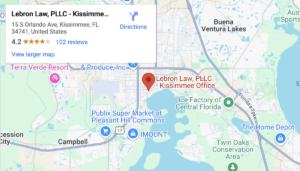
We serve all through Osceola County and its surrounding areas in Florida. Visit our office at:
Lebron Law, PLLC Kissimmee
15 S Orlando Ave, Kissimmee, FL 34741
(321) 800-5195